Technology That Works So You Can Focus on Running Your Business
January 6, 2026
Paradise Stream Campground Backhaul Upgrade
February 5, 2026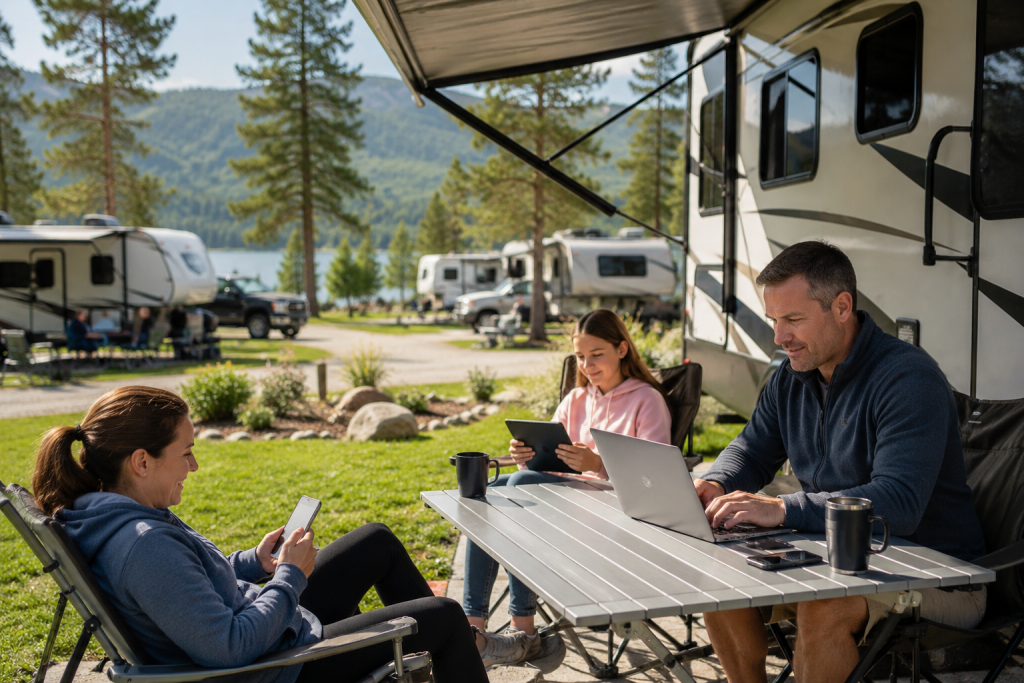
Your campground may have spacious sites, clean facilities, friendly employees, and a beautiful setting—but if guests can’t connect to dependable Wi-Fi, that frustration can become part of how they remember their stay.
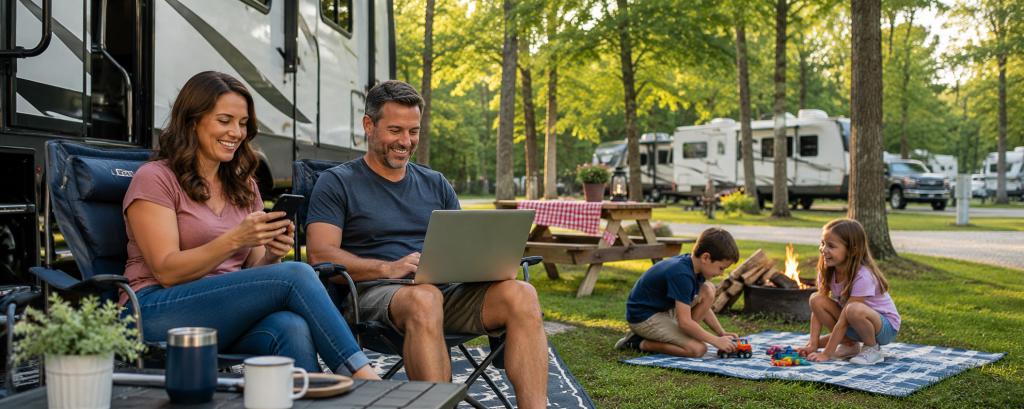
Picture a family arriving at your campground on a Friday afternoon. One parent needs to finish a work assignment. The children want to use their tablets. Someone is checking the weather and looking for a nearby restaurant. Another guest is trying to stream a movie after spending the day outdoors.
Within a few minutes, several devices may be competing for the same connection—and that is happening at campsites throughout the property.
When the campground Wi-Fi works, guests rarely think about it. When it does not, they may call the office, interrupt your staff, mention the problem in a review, or choose another campground for their next trip.
Today’s Campers Expect to Stay Connected
Camping may offer an opportunity to unplug, but that doesn’t mean every guest wants—or is able—to disconnect completely.
Some guests are working remotely while traveling. Others use the internet to communicate with family, plan the next part of their trip, check campground information, monitor weather conditions, stream entertainment, complete schoolwork, or manage their businesses from the road.
The RV Industry Association has reported that internet connectivity is important to a significant percentage of RV travelers, including guests who work from their RVs.
Reliable Wi-Fi is no longer viewed as an unusual campground upgrade. For many travelers, it is part of the basic information they consider when deciding where to stay.
Poor Wi-Fi Creates More Than a Technical Problem
A weak campground network does not only affect the guest trying to connect. It can create additional work throughout the business.
- Guests repeatedly call or visit the office for help.
- Employees spend time restarting equipment and explaining outages.
- Payment terminals or reservation systems may lose connectivity.
- Security cameras and other connected systems may become unreliable.
- Guests may request discounts or refunds.
- Wi-Fi complaints may appear in public reviews.
- Travelers may decide not to return.
Wi-Fi cannot replace friendly service, clean restrooms, level campsites, reliable utilities, or enjoyable amenities. However, it has become another part of the overall guest experience.
When guests are comparing two otherwise similar campgrounds, dependable connectivity may help influence which property they select.
More Internet Speed Is Not Always the Solution
When campground Wi-Fi performs poorly, the first reaction is often to purchase a faster internet plan.
Additional bandwidth may help when the incoming connection does not have enough capacity for the number of users. However, internet speed is only one part of a campground Wi-Fi system.
Performance may also be affected by:
- Insufficient wireless coverage
- Poor access-point placement
- Outdated or undersized equipment
- Too many users connected to one access point
- Wireless interference
- Damaged or inadequate cabling
- Trees, buildings, RVs, and other physical obstructions
- A network that was not designed for future growth
Campgrounds present challenges that do not exist in a typical home or small office. The network may need to cover many acres, reach around buildings and mature trees, serve indoor and outdoor areas, and perform despite large RVs repeatedly entering and leaving the property.
CKG Technology Solutions specializes in indoor and outdoor Wi-Fi networking, fiber, fixed wireless, surveillance, and supporting infrastructure designed for campgrounds and other expansive properties.
Signs Your Campground Wi-Fi Needs Attention
You do not need to wait for the entire network to fail before evaluating it. Wi-Fi problems often provide warning signs long before they become major disruptions.
Your campground network may need attention if:
- Wi-Fi works near the office but not throughout the campground.
- Service becomes noticeably slower during evenings or weekends.
- Guests regularly report dead zones at certain campsites.
- Video calls freeze or disconnect.
- Streaming works in some areas but not others.
- Access points frequently need to be restarted.
- New sections of the property have been added without expanding the network.
- Online reviews repeatedly mention weak or unreliable Wi-Fi.
- Your staff has accepted recurring connection problems as normal.
These symptoms may indicate a bandwidth problem, but they may also point to coverage limitations, congestion, aging hardware, interference, or an infrastructure issue.
Campground Wi-Fi Must Be Designed for the Property
There is no single Wi-Fi system that works for every campground.
A small, open property may require a very different solution than a heavily wooded campground with hills, cabins, multiple buildings, seasonal sites, and several hundred guests.
An effective network begins with understanding how the property is used:
- Where do guests need coverage?
- Which areas experience the most demand?
- How many devices may be connected during peak occupancy?
- What physical obstacles affect the signal?
- Which business systems need to be separated from guest traffic?
- Will the campground add sites, buildings, cameras, or amenities later?
CKG’s completed campground technology projects demonstrate how network infrastructure can be designed around the actual layout and operational needs of each property.
For example, the Lazy K Campground Wi-Fi and security upgrade combined improved network infrastructure with dependable surveillance coverage rather than treating each system as an unrelated installation.
Better Wi-Fi Supports Better Hospitality
Campground hospitality is about removing unnecessary frustrations from the guest experience.
Visitors should be able to arrive, settle into their site, and enjoy their stay without repeatedly calling the office because they cannot connect. Employees should be able to focus on welcoming guests and operating the campground instead of troubleshooting the same network problems every weekend.
A well-designed Wi-Fi system cannot guarantee that every device or internet application will perform perfectly at all times. It can, however, provide the capacity, coverage, and network management needed to deliver a much more consistent experience.
Frequently Asked Questions
Why is campground Wi-Fi different from home Wi-Fi?
Campground Wi-Fi must cover a much larger outdoor area, serve more users and devices, and work around trees, buildings, terrain, and large RVs. It requires equipment and network planning designed specifically for expansive outdoor environments.
How much internet speed does a campground need?
The answer depends on the number of sites, expected occupancy, guest usage, business systems, available internet services, and how the network manages traffic. Speed is important, but coverage, equipment capacity, and network design are equally important.
Can campground Wi-Fi be improved without replacing everything?
In many cases, yes. An evaluation can determine whether existing cabling, access points, switches, or other equipment can remain in service. Improvements may involve replacing only the components that are limiting coverage, capacity, reliability, or security.
Can poor campground Wi-Fi affect guest reviews?
Yes. Guests often mention Wi-Fi when it does not meet their expectations, particularly when connectivity was advertised as an amenity. Recurring complaints can affect how future travelers evaluate the campground before making a reservation.
Is Your Campground Network Ready for Your Guests?
If your campground struggles with dead zones, slow evening service, repeated guest complaints, or a network that has not kept pace with your property, contact CKG Technology Solutions. We can evaluate your current infrastructure and help determine what your campground actually needs—without assuming that every problem requires replacing the entire system.